活動記實
14 Sep 2026
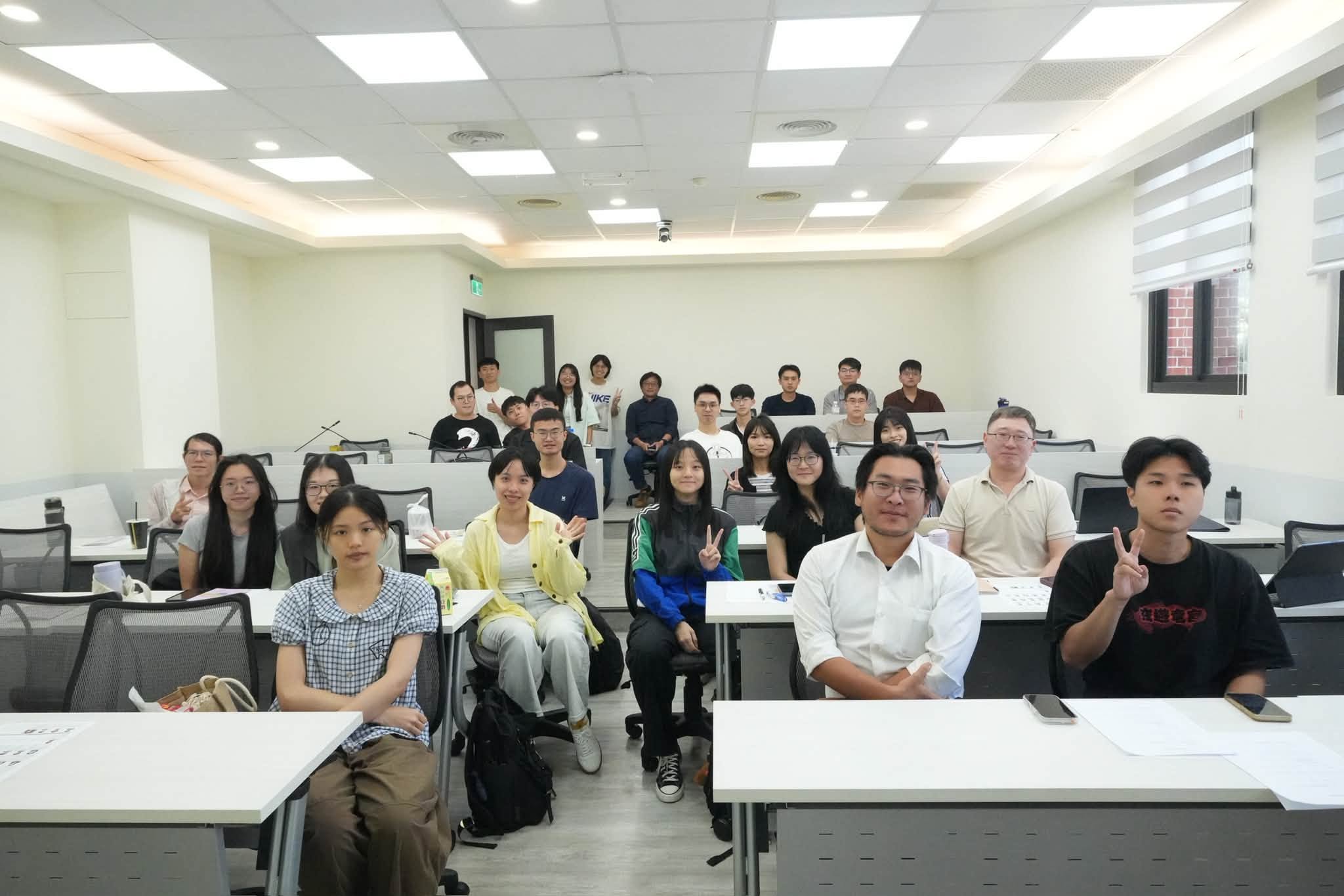
【真正高興的見到你迎新活動】
開學一週啦!大家都還撐得住嗎
選課選好了嗎?教室找到了嗎?
還有……學會怎麼跟中山獼猴和平共處了嗎
今年迎新也很熱鬧!
碩專班 17位新生滿額報到,大家來自不同領域、帶著不同工作經驗加入政研所,之後的課堂討論應該會很精彩
迎新當天除了老師們輪番送上勉勵、也有尚儒老師分享的生存手冊和選課提醒,所學會也安排了超考驗臨場反應的 15秒畫人挑戰 不知道經過這場遊戲,大家有沒有更認得老師們了,還是只記得同學的畫作
新學期才剛開始,慢慢找到自己的節奏就好。
歡迎大家加入中山政研所,接下來一起上課、做研究,也一起累積更多研究所日常
13 Aug 2026

Allen Carlson :Who Will Choose the Next Dalai Lama? China's Expanding Narrative of Control over Reincarnate Selection
本所舉辦「瞭望中國與臺海情勢」系列講座,資訊如下:
講題:Who Will Choose the Next Dalai Lama? China's Expanding Narrative of Control over Reincarnate Selection
主講人:Allen Carlson (Associate Professor of Cornell University)
時間:2026年8月5日(三)14:00-16:00
地點:政治所演講廳(社SS 3004-2)
語言:英語
活動亮點:
Tibetans and Beijing disagree over who has authority to select the next Dalai Lama. Drawing on Chinese-language sources, this talk traces how China's claim of control has hardened since the late 1980s, and asks what it signals for Taiwan.
10 Jun 2026
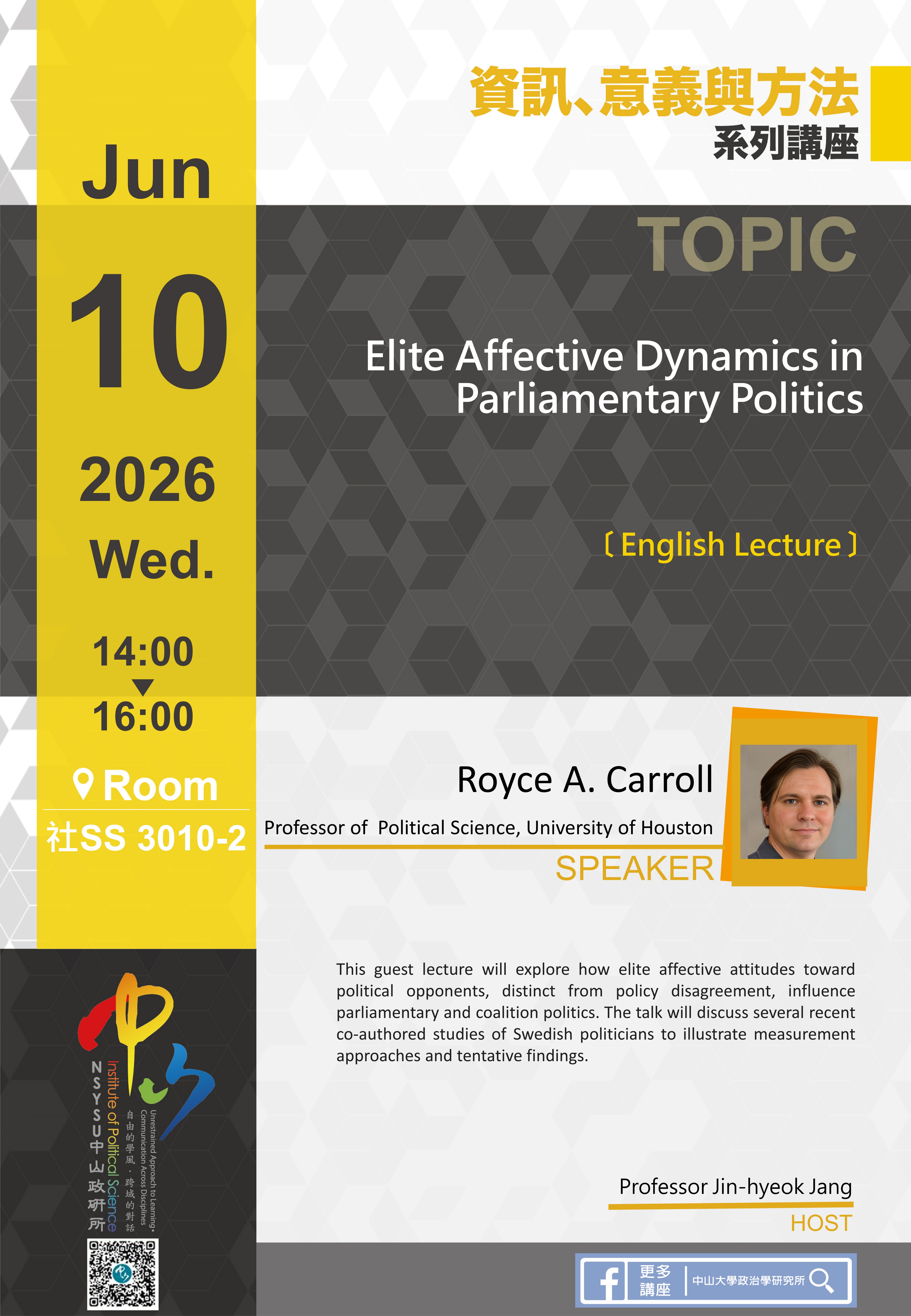
Royce A. Carroll:Elite Affective Dynamics in Parliamentary Politics
本所舉辦「資訊、意義與方法」系列講座,資訊如下:
講題:Elite Affective Dynamics in Parliamentary Politics
主講人:Royce A. Carroll (Professor of Political Science, University of Houston)
時間:2026年6月10日(三)14:00-16:00
地點:政治所演講廳(社SS 3010-2)
語言:英語
活動亮點:
This guest lecture will explore how elite affective attitudes toward political opponents, distinct from policy disagreement, influence parliamentary and coalition politics. The talk will discuss several recent co-authored studies of Swedish politicians to illustrate measurement approaches and tentative findings.
10 Jun 2026
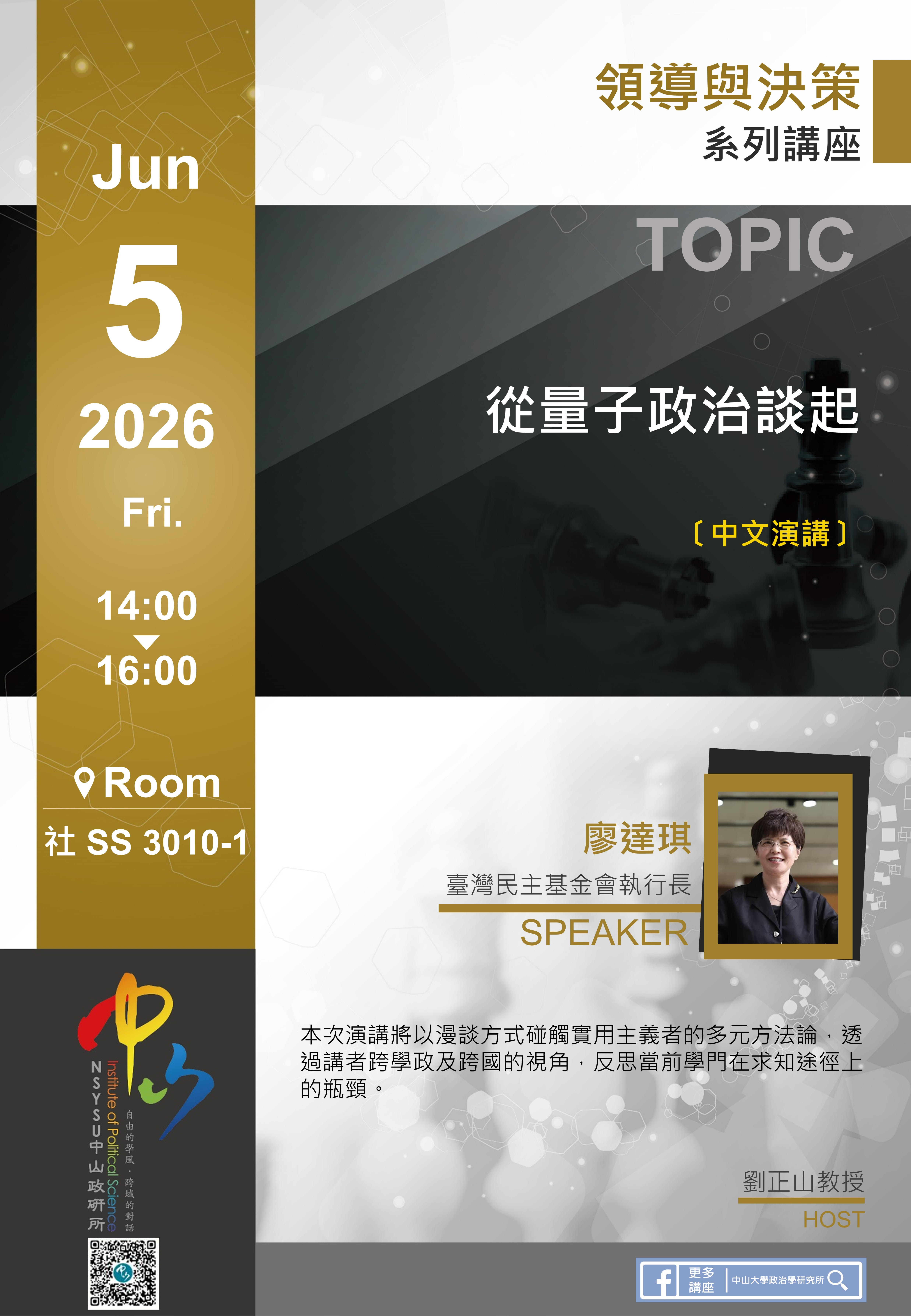
廖達琪 (臺灣民主基金會執行長):從量子政治談起
講題:從量子政治談起
主講人:廖達琪 (臺灣民主基金會執行長)
時間:2026年6月5日(五)14:00-16:00
地點:政治所 社SS 3010-1
語言:中文
活動亮點:
本次演講將以漫談方式碰觸實用主義者的多元方法論,透過講者跨學政及跨國的視角,反思當前學門在求知途徑上的瓶頸。
04 Jun 2026
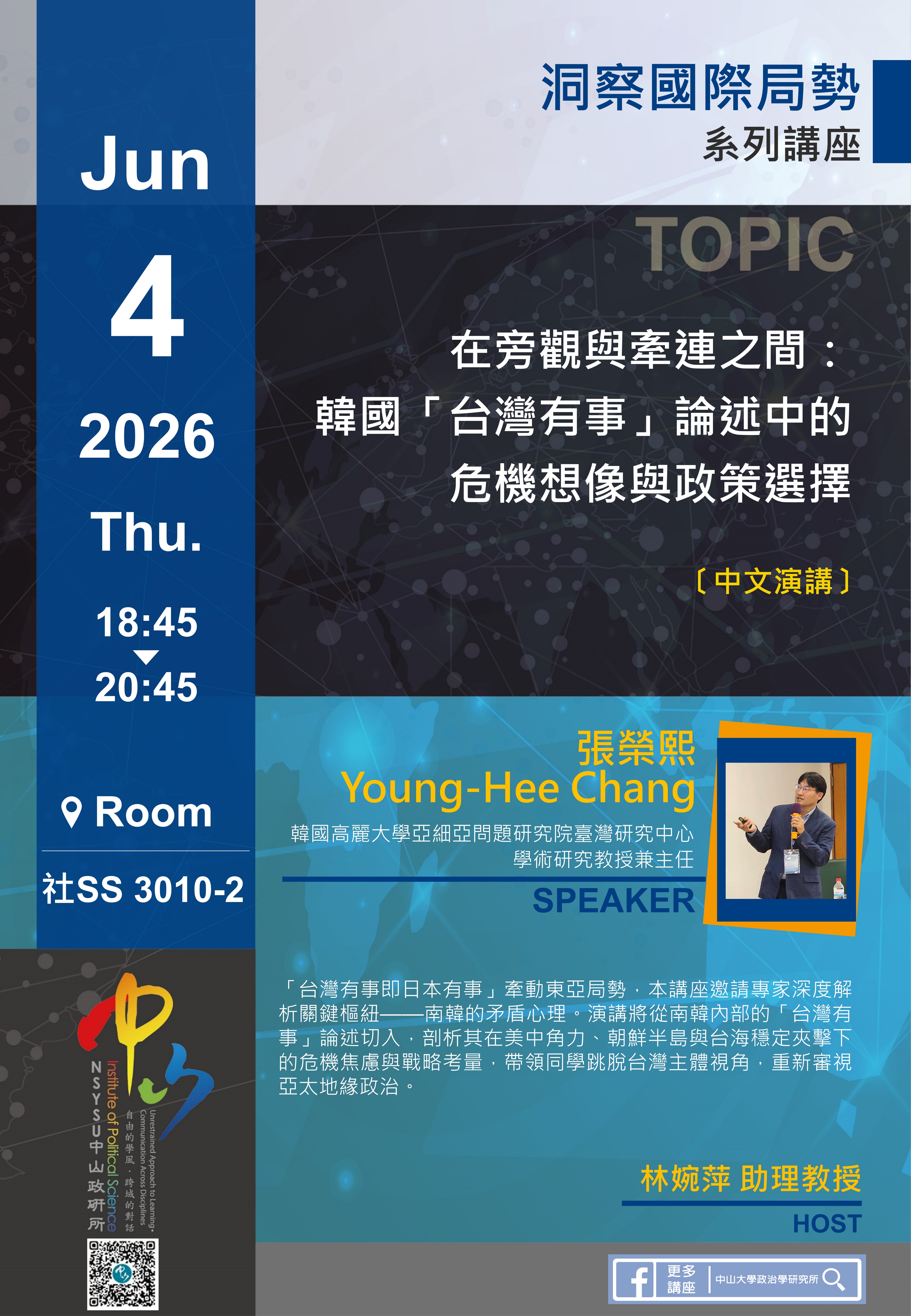
張榮熙 Young-Hee Chang:在旁觀與牽連之間:韓國「台灣有事」論述中的危機想像與政策選擇
本所舉辦「洞察國際局勢」系列講座,資訊如下:
講題:在旁觀與牽連之間:韓國「台灣有事」論述中的危機想像與政策選擇
主講人:張榮熙 Young-Hee Chang(韓國高麗大學亞細亞問題研究院臺灣研究中心學術研究教授兼主任)
時間:2026年6月4日(四)18:45-20:45
地點:政治所演講廳(社SS 3010-2)
語言:中文
活動亮點:
「台灣有事即日本有事」牽動東亞局勢,本講座邀請專家深度解析關鍵樞紐——南韓的矛盾心理。演講將從南韓內部的「台灣有事」論述切入,剖析其在美中角力、朝鮮半島與台海穩定夾擊下的危機焦慮與戰略考量,帶領同學跳脫台灣主體視角,重新審視亞太地緣政治。
25 May 2026
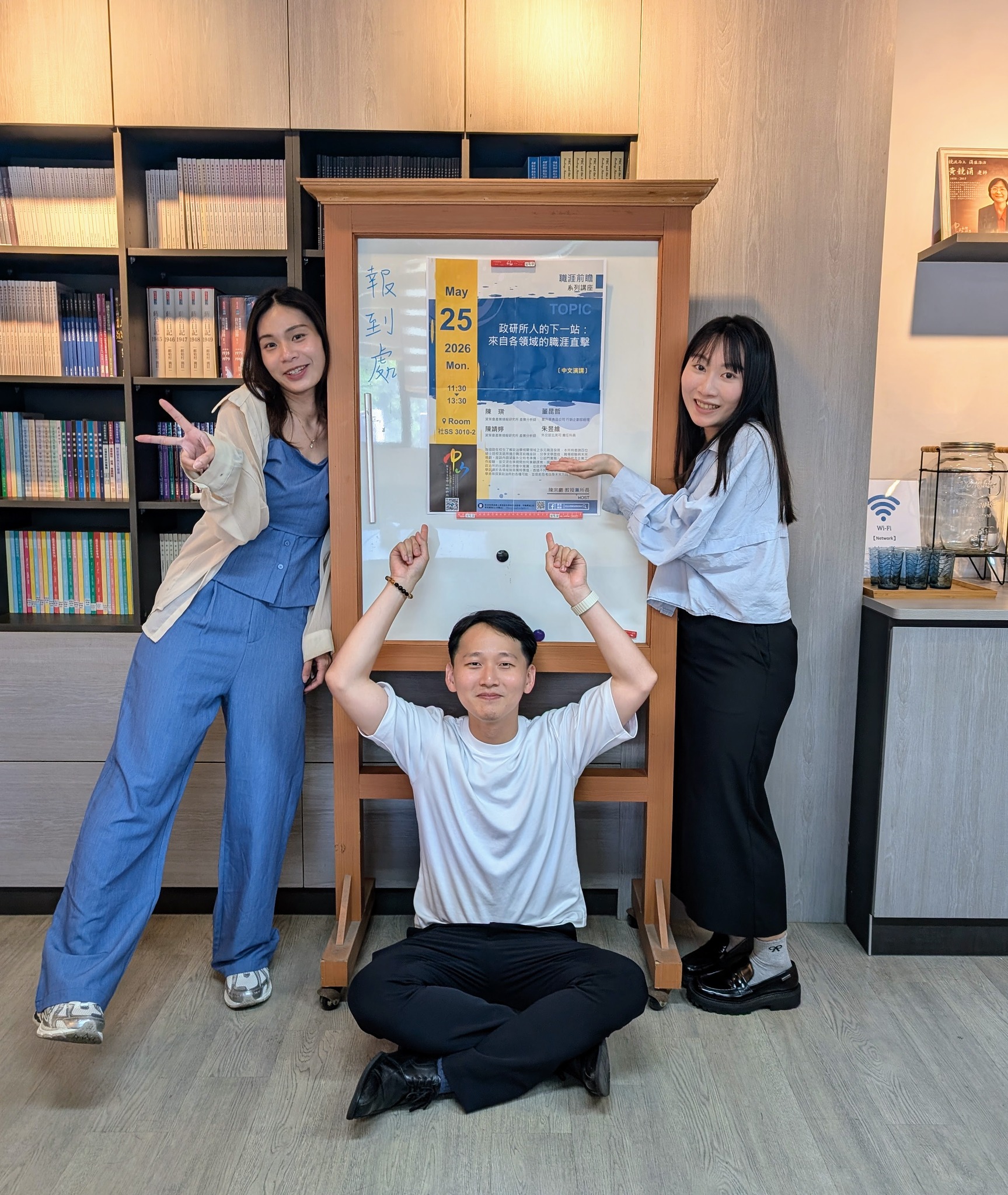
【政研人的下一站】撞牆、學習、解決問題,然後幸福!
今天真的太開心了,政治所特別邀請三位優秀的學長姐陳琪、陳靖婷與董昆哲回娘家分享,聊聊政研所畢業之後,他們各自在哪裡撞牆,走向了哪裡、又如何在那裡發光。
陳琪與靖婷目前同在資策會產業情報研究所擔任產業分析師。在她們眼中,在高雄修業最棒的事之一,是有很多演唱會可以聽(誤)。除了玩樂,她們的分享真的讓人很有感。資策會不是個容易進入的單位,而政研所訓練出來的全球政經敏感度與分析能力,正是她們能夠在職場發光發熱的重要資產。在地緣政治風雲詭譎的今天,產業界迫切需要這樣的知識與素養,協助公部門因應即時的變動,也協助產業與民間社會,面對可能到來的衝擊。
曾經讓人頭疼的報告訓練,如今聽她們信手拈來分析政治經濟現象,那份從容,是學術養成真正融入生活與職涯的樣子,關稅戰不再是可以緩個幾天在研究的論文題目,而是必須在衝擊出現的那一刻,就要努力面對,即刻研究、理解與提出方案的任務。陳琪與靖婷的耕耘與努力,一點一滴為台灣的未來打下更厚實的基礎。
昆哲目前在豐升原食品股份有限公司擔任行銷企劃部經理,是從政治工作轉向民間企業的一個精彩故事。政研所的學位,乍看之下和食品行銷風馬牛不相及。但昆哲的分享提醒了我們,人文社科的訓練,給的從來不只是知識,而是一套與人相處、與組織周旋、與問題正面對決的能力。計畫、規範、溝通、應變,這些事情,做過公共事務的人再熟悉不過。每一次撞牆都是一次進化,每一個問題都讓那個「解決問題的DNA」更強一點。昆哲正在職場裡,慢慢成為他自己期待的樣子。
演講簡報1
演講簡報2
18 May 2026

Janice Feng :Reproducing Utopia: The Traffic in Women, Sexual Violence, and Settler-Colonial Founding
本所舉辦「思想與實踐」系列講座,資訊如下:
講題:Reproducing Utopia: The Traffic in Women, Sexual Violence, and Settler-Colonial Founding
主講人:Janice Feng, Ph.D. Assistant Professor of Political Studies and Philosophy Trent University (Canada)
與談人:趙恩潔 En-Chieh Chao 國立中山大學社會學系 教授兼系主任
時間:2026年5月18日(一)14:00-16:00
地點:政治所演講廳(社SS 3010-2)
語言:英語
活動亮點:
當代政治思想中,烏托邦理念正經歷復興。然而,烏托邦思想不僅與極權主義存在關聯,更與殖民主義及帝國主義有著深刻的歷史與邏輯連結。本講座聚焦近代早期,透過解讀Henry Neville的烏托邦小說《松樹島》,並對照歐洲殖民美洲的實踐,揭示強制異性戀生殖如何成為烏托邦敘事與殖民地建構的核心。烏托邦的實現以女性,尤其是原住民與種族化女性的身體與生育為代價。去殖民化烏托邦政治思想,必須正視這一關鍵問題:誰在再製烏托邦?
The contemporary moment has seen a resurgence of utopian political thinking. Scholars from different fields deliberately evoke utopia and take up utopia as a modality of theorizing to imagine alternative forms of collective political life that would enable us to
16 May 2026
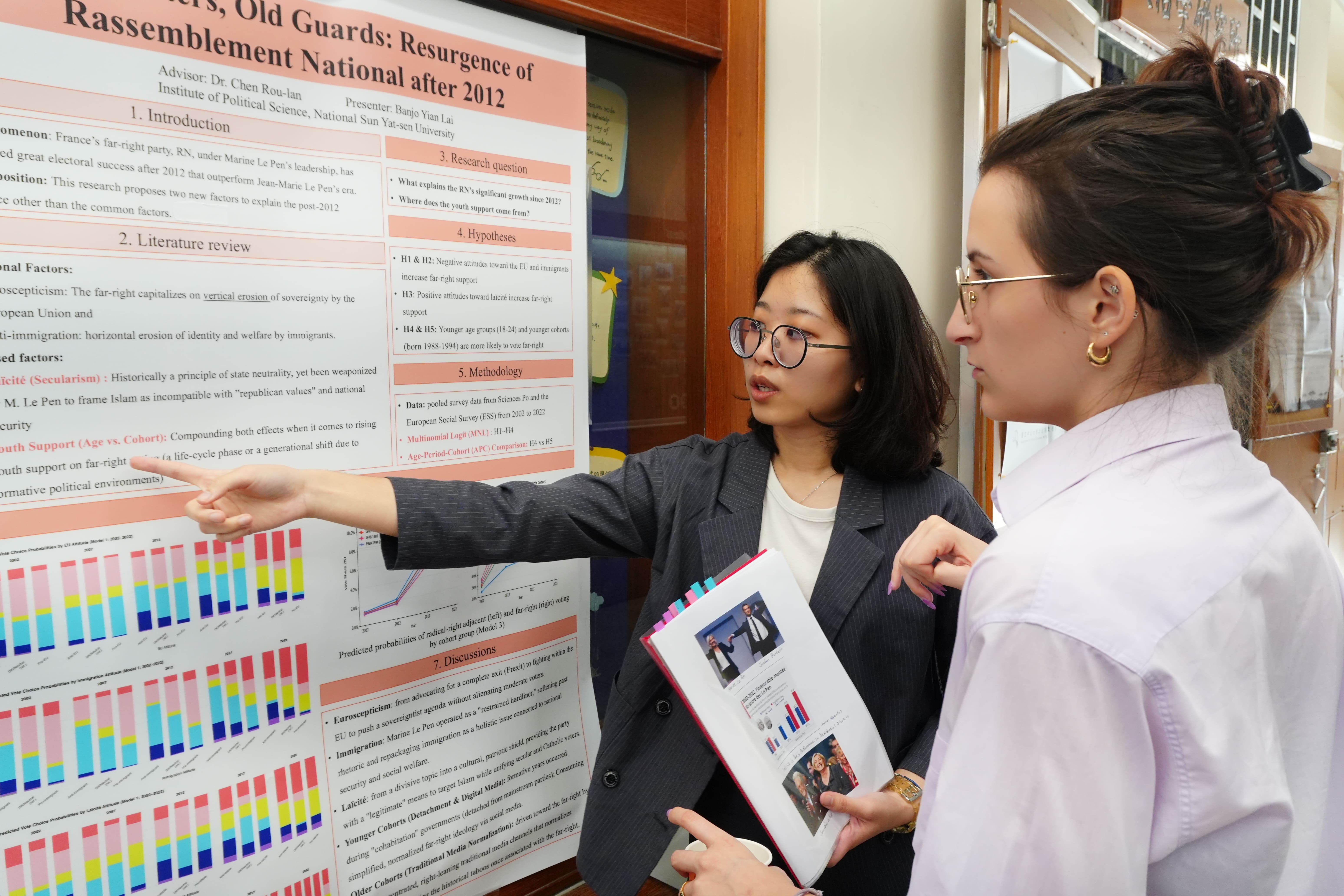
【活動紀實】海報發表現場超精彩!中山政研學生研究火力全開
中山大學政治學研究所與「資料分析與社會創新:AI 輔助的跨域共學與實踐計畫」共同舉辦的學生研究工作坊,於 5 月 15 日熱鬧登場!本次海報發表集結多組碩、博士生研究成果,現場從政治傳播、國際安全,到 AI 與資料分析應用,題目多元、討論滿滿,完全是學術版的「研究成果大亂鬥」!
本次海報分為「Proposal 組」與「Full Research with Findings 組」,同學們不只要把研究問題講清楚,還得在有限時間內說服評審:「我的研究真的很有料!」現場可以看到大家認真介紹研究設計、分析結果,和老師、與會學者們熱烈交流,討論聲幾乎沒停過。
這次發表也出現許多超有趣的研究題目,例如探討「台灣有事」情境下,日本民眾是否會支持自衛隊介入,以及不同「正當性論述」如何影響公眾態度的調查實驗研究。
除了成果展示,本次海報也安排評選活動,由主持與發表學者共同擔任評審,各組選出三名優秀作品,並頒發獎金鼓勵同學持續深耕研究。
從研究發想到成果展示,大家不只是在「做報告」,更是在把自己的研究理念真正說給別人聽。看到同學們在海報前自信分享、互相交流,也讓整場工作坊充滿滿滿學術能量
中山政研,持續用研究連結世界、用對話激盪觀點!
13 May 2026
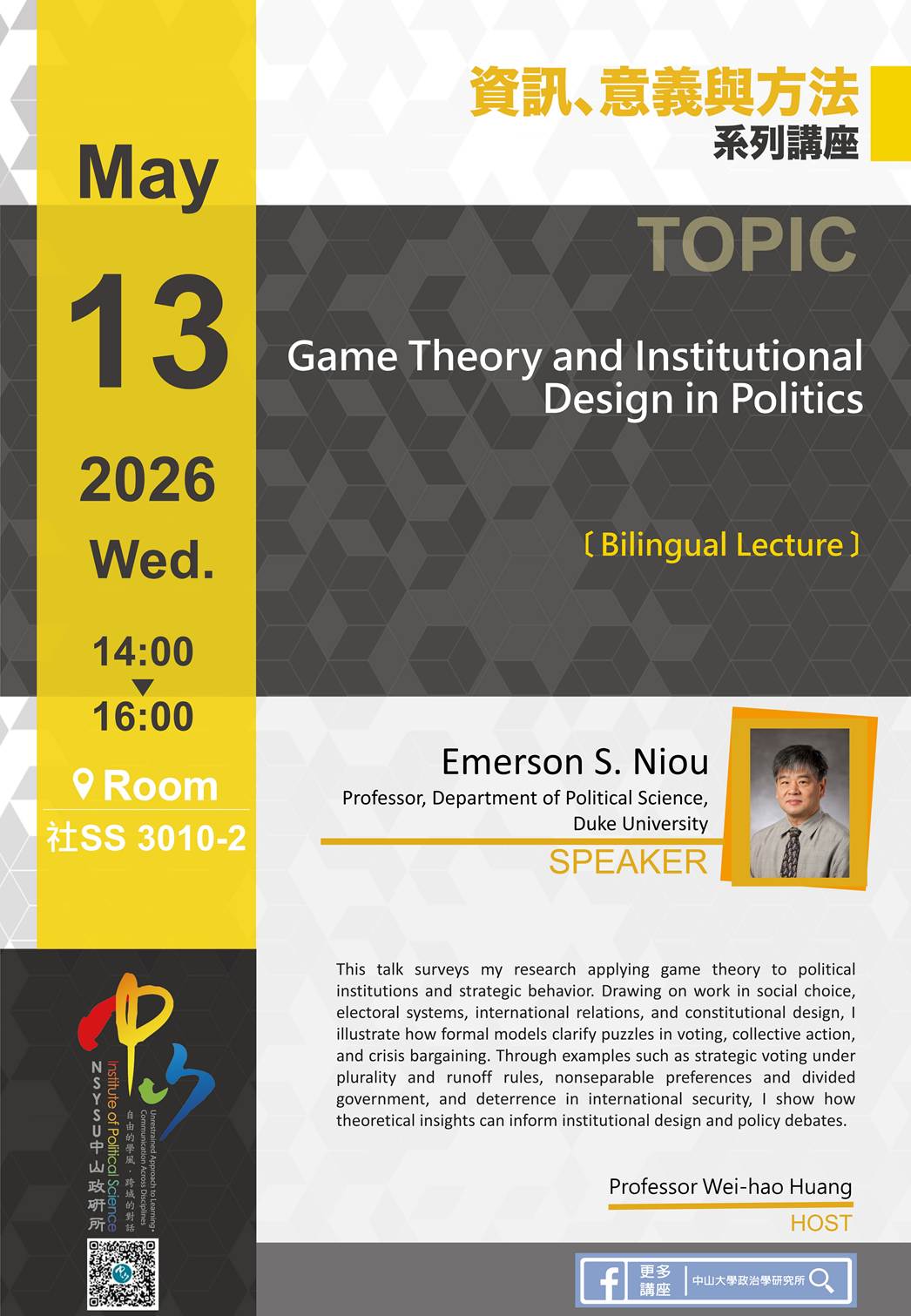
Emerson S. Niou:Game Theory and Institutional Design in Politics
本所舉辦「資訊、意義與方法」系列講座,資訊如下:
講題:Game Theory and Institutional Design in Politics
主講人:Emerson S. Niou (Professor, Department of Political Science, Duke University)
時間:2026年5月13日(三)14:00-16:00
地點:政治所演講廳(社SS 3010-2)
語言:雙語
活動亮點:
This talk surveys my research applying game theory to political institutions and strategic behavior. Drawing on work in social choice, electoral systems, international relations, and constitutional design, I illustrate how formal models clarify puzzles in voting, collective action, and crisis bargaining. Through examples such as strategic voting under plurality and runoff rules, nonseparable preferences and divided government, and deterrence in international security, I show how theoretical insights can inform institutional design and policy debates.